What Is a Welding Machine?
Table of Contents
ToggleA welding machine is a specialized device that joins two or more materials (primarily metals) using heat, pressure, or a combination of both. These machines create permanent bonds by melting the base materials at their junction points, forming strong, continuous connections essential in countless industries from automotive manufacturing to infrastructure development.
While many people associate welding machines specifically with arc welding equipment, the term encompasses various technologies, each designed for specific applications and materials.
Welding is fundamentally about creating metallurgical bonds between materials. The process involves melting base materials and often adding filler material to create joints stronger than the original components.
According to JIS (Japanese Industrial Standards), welding is defined as “an operation that unites two or more base materials by heat, pressure, or both, creating continuity between the materials being joined.”
This definition encompasses several welding methods:
Uses heat to melt materials
Uses mechanical force
Uses filler metals with lower melting points
Most industrial applications rely on fusion welding due to its versatility and strength characteristics.
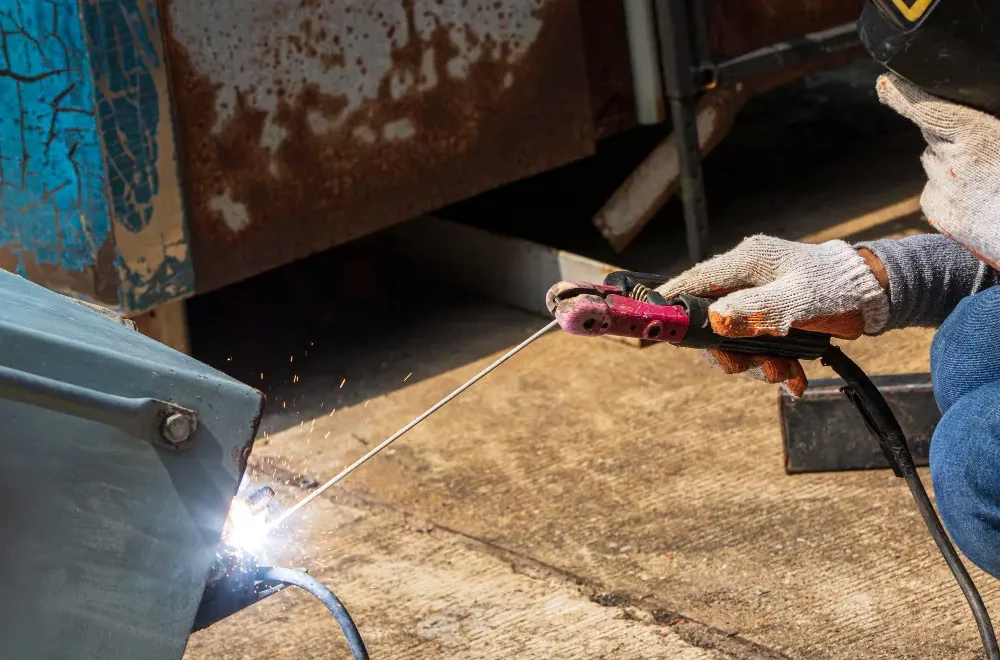
Arc welding machines represent the most widely used welding technology, utilizing electric arcs as heat sources. These versatile machines generate temperatures between 5,000°C and 20,000°C, sufficient to melt most industrial metals.
Power Requirements: Arc welding machines are available in various power configurations, from household 100V units for light work to industrial three-phase systems for heavy-duty applications.
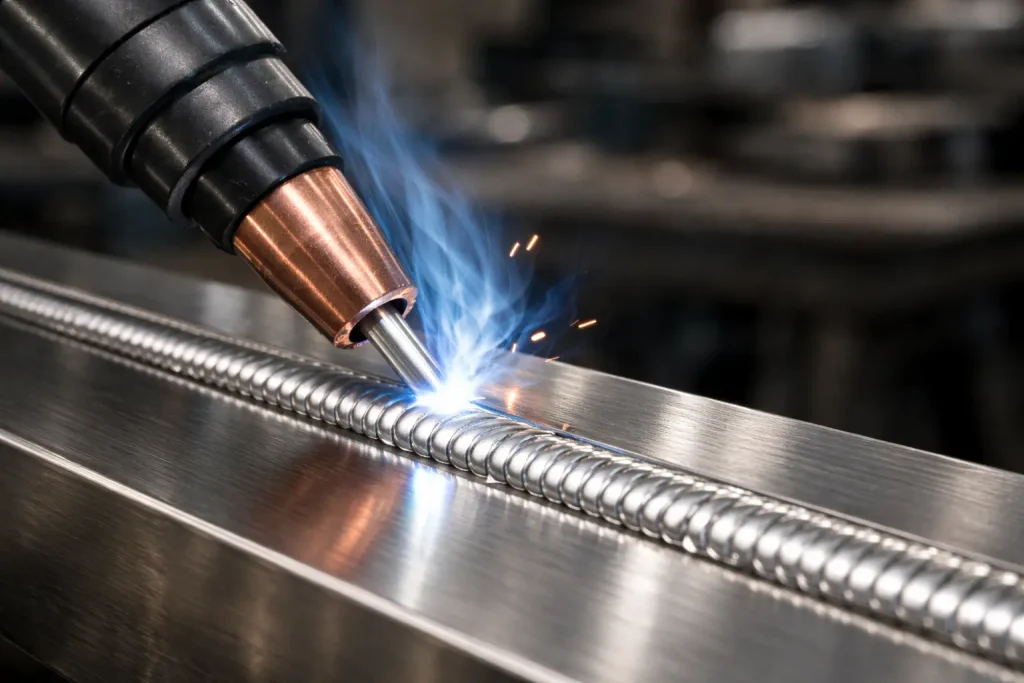
MIG (Metal Inert Gas) and MAG (Metal Active Gas) welding machines use protective gas atmospheres to shield the weld area from contamination. These semi-automatic or automatic systems offer high productivity and consistent quality.
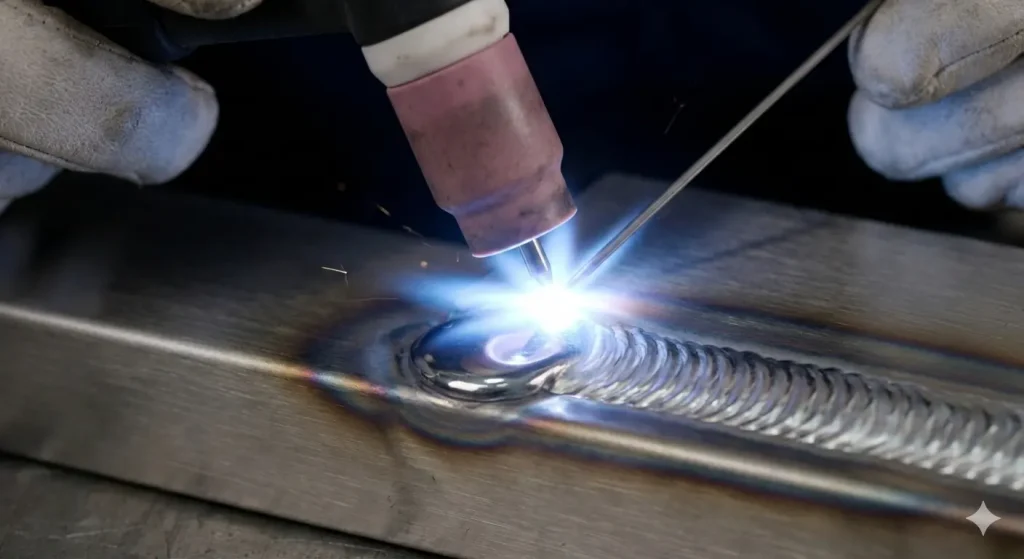
TIG (Tungsten Inert Gas) welding machines provide the highest precision and control among common welding processes. Using non-consumable tungsten electrodes in inert gas environments, these machines excel at delicate, high-quality applications.
Laser welding represents cutting-edge technology, delivering extremely concentrated energy for precise, high-speed welding. These machines enable automation and exceptional repeatability.
Efficient, versatile, low maintenance
High power capabilities, established technology
Compact, energy-efficient
Choosing the right welding machine significantly impacts work efficiency, quality, and safety. Here are the critical factors to consider:
Different welding machines excel with specific materials:
Understanding power requirements prevents electrical issues and ensures optimal performance:
Power Calculation Example: A 4KVA machine requires about 40 amps, which approaches typical residential service limits (30A-40A). Exceeding these limits can cause circuit breaker trips or voltage drops.
Duty cycle indicates how long a machine can operate continuously without overheating:
4 minutes operation, 6 minutes cooling (per 10-minute period)
6 minutes operation, 4 minutes cooling
Continuous operation capability
The global welding equipment market demonstrates robust growth, driven by industrial expansion and technological advancement. Market size reached approximately $11.58 billion in 2018, with projections indicating growth to $18.79 billion by 2026.
Indonesia’s rapidly growing manufacturing and infrastructure sectors create increasing demand for quality welding equipment and expertise. Industries such as automotive, shipbuilding, and construction require reliable welding solutions to maintain competitive advantage.
Understanding price segments helps align equipment selection with budget and performance requirements:
¥20,000 – ¥50,000
Target Users: Hobbyists, occasional users, small repairs
¥50,000 – ¥200,000
Target Users: Professional fabricators, maintenance shops
¥200,000+
Target Users: Production facilities, heavy industry
Modern manufacturing increasingly relies on welding automation to achieve consistency, efficiency, and cost-effectiveness.
Proper fixturing ensures consistent results and facilitates automation:
Welding machines typically have a statutory useful life of 10 years under tax classifications. However, practical replacement timing depends on several factors:
In Indonesia’s diverse industrial landscape, welding quality directly impacts competitiveness across multiple sectors. From automotive manufacturing to shipbuilding and infrastructure development, reliable welding equipment and processes are essential for meeting international quality standards.
Quality management systems
Automotive quality standards
Marine and offshore applications
Indonesian national standards
These certifications ensure that welding operations meet both domestic requirements and international export standards, crucial for companies serving global markets.
Selecting the right welding machine requires careful consideration of application requirements, material compatibility, power limitations, and long-term operational needs. Whether you’re establishing new production capabilities or upgrading existing equipment, understanding these factors ensures optimal investment decisions.
The welding industry continues evolving with technological advancements in automation, process control, and energy efficiency. Staying informed about these developments and choosing equipment from reputable manufacturers with strong support networks helps maintain competitive advantage in today’s demanding industrial environment.
For complex applications or specialized requirements, consulting with experienced welding professionals and equipment suppliers can provide valuable insights for optimizing your welding processes and achieving project success.
Explore the unique features and benefits of this product, designed to deliver exceptional performance and reliability. Unlock the potential it offers for your projects and see how it stands out in quality and value.
Social Chat is free, download and try it now here!